Monday, 19 December 2022

Moribayassa Djembe Rhythm: Learn How to Play 4 Patterns & Play-Along the Groove

https://www.youtube.com/embed/_E5G1dz7eL0


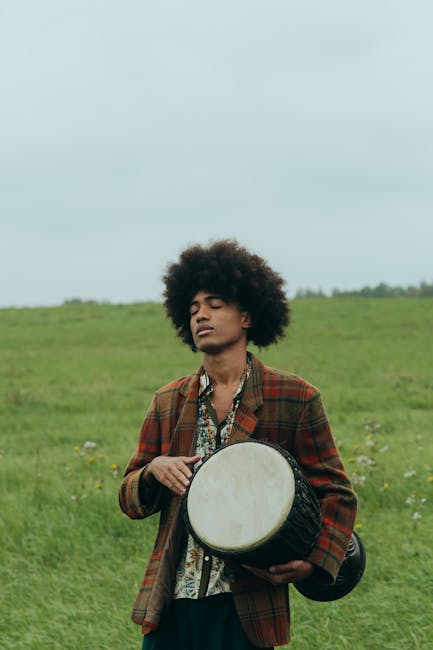
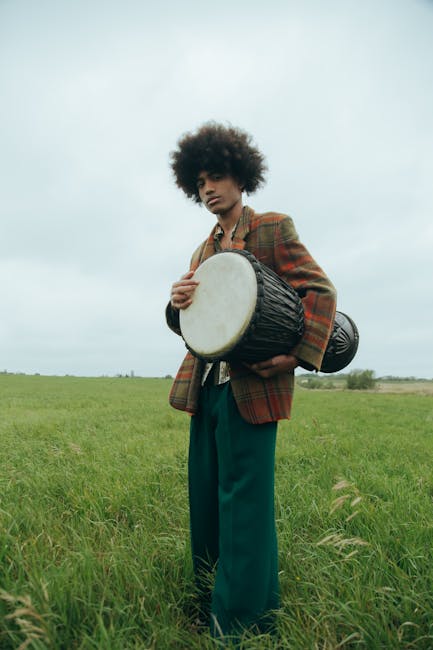
The drum noises when the hawk shows up with a bunny - Nigerian claiming This is just how the complete rhythm appears at medium speed Now, allow'' s simplify djembe 1 Currently a little bit quicker ... djembe 2 Currently a bit quicker ... djembe 3 Currently a little bit quicker ... Dundun & & bell Now a bit much faster ... Drum-Along: let'' s start by inspecting how each drum line beings in the complete rhythm Now simply maintain drumming.


pexels-photo-10433635.jpeg?auto=compress&cs=tinysrgb&h=650&w=940

get djembe here - click

https://howtoplaythedjembedrums.com/moribayassa-djembe-rhythm-learn-how-to-play-4-patterns-play-along-the-groove-3/

French Nursery Rhyme "Ecoutez dans la brousse".

https://www.youtube.com/embed/5ao6bXbIhJk


listen eavesdrop the bush the djembe the djembe thumb piano the thumb piano so do the balafons the tom-toms of Africa so do the balafons the tom-toms of Africa, pay attention.


pexels-photo-10433634.jpeg?auto=compress&cs=tinysrgb&h=650&w=940

learn djembe here - click

https://howtoplaythedjembedrums.com/french-nursery-rhyme-ecoutez-dans-la-brousse-2/

Mr Eazi - Patek (feat. DJ Tárico & Joey B) [Visualizer]

https://www.youtube.com/embed/XJc17xPZDUg


Any kind of money way i obtain I dey flex I dey ball You dey irritate I dey shop Patek Shey you see flyboy in the jet My infant my pet dog Shey na pussycat See back, see the nyash Freebie, me be that She go whine am well when she see the cash Money( money) Sing it Cash money (go go) Cash (ga ga) Money She go whine am well When she see the cash Let ■ s go Yenko Aba Go go Sing it Cash Yea yea remark tu t ■ appelle Je m ■ appelle Yea yeah comment tu t ■ appelle Je m ■ appelle Any type of cash method i get Flenjo Cash i dey matter Census Hot women Mentos I dey fuck well well Censor She go gripe am when she see the money If i Hushppuppi She go in shape detach If i hide the money She go see the cash money Bend down well When you see the money Allow ■ s go Cash Yenko Cash money Aba Money Go go Money Sing it (Money) Bend down well When you see the money Allow ■ s go Yenko Aba Go go Sing it Cash money I dey flex ehh Allow ■ s go Yenko Aba Go go Sing it Cash money Let ■ s go Yenko Aba Go go Sing it Money She go whine am well when she see the money Any money way i get I dey flex comment tu t ■ appelle Je m ■ appelle Any type of money means i get I dey flex remark tu t ■ appelle Je m ■ appelle Allowed ■ s go Yenko Aba Go go Sing it Cash money I dey flex Let ■ s go Yenko Aba Go go Sing it Cash money I dey flex


null

learn djembe here - click

https://howtoplaythedjembedrums.com/mr-eazi-patek-feat-dj-tarico-joey-b-visualizer/

Hewan Terbesar Yang Berjalan Di Muka Bumi | Gajah Afrika

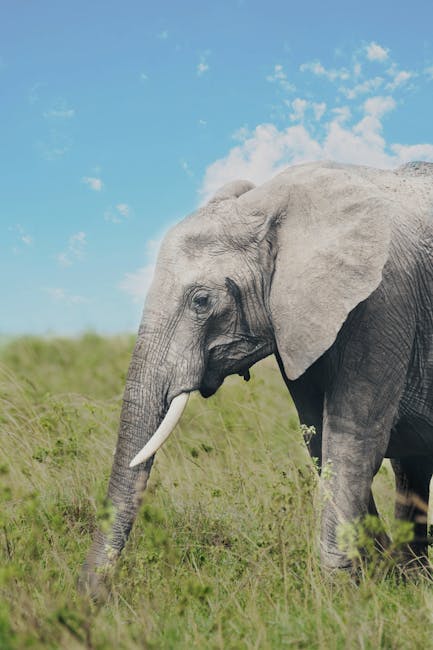
African elephants are the largest animals  walking on earth Their herds wander through 37 countries in Africa They are easily recognized by their trunk that is used for communication and handling objects and their large ears allow them to radiate excess heat   upper incisor teeth develop into tusks in African elephants and grow throughout their lifetime   there are two species of African elephants, the savannah and forest elephant Savannah elephants are larger than forest elephants and their tusks curve outwards In addition to being smaller, forest elephants are darker and their tusks are straighter and point downward there are also differences in the size and shape of the skull and skeleton between the two species The presence of African elephants helps to  maintain suitable habitats for many other species   In central African forests, up to 30 tree species may require elephants to help with dispersal and germination  They play a pivotal role in shaping their habitat because of the enormous impact they have on factors ranging from freshwater to forest cover African elephants are keystone species, meaning they play a critical role in their ecosystem   also known as "ecosystem engineers"   elephants shape their habitat in many ways During the dry season, they use their tusks to dig up dry riverbeds  and create watering holes many animals can drink from Their dung is full of seeds, helping plants spread across the environment and it makes a pretty good habitat for dung  beetles too In the forest, their feasting on trees and shrubs creates pathways for smaller animals to move through an elephant's trunk is actually a long nose used for smelling, breathing, trumpeting, drinking and also for grabbing things, especially a potential meal The trunk alone contains about 40.000 muscles African elephants have two finger-like features on the end of their trunk, that they can use to grab small items Both male and female African elephants  have tusks, which are continuously growing teeth Savannah elephants have curving tusks, while the tusks of forest elephants are straight   they use these tusks to dig for food  and water and strip bark from trees males, whose tusks tend to be larger than females also, use their tusks to battle one another elephants are matriarchal, meaning they live in female lead groups the matriarch is usually the biggest and oldest   she presides over a multi-generational herd that includes other females, called cows, and their young Adult males, called bulls, tend to roam on their own, sometimes forming smaller, more loosely associated all-male groups   having a baby elephant is a serious commitment elephants have a longer pregnancy than  any other mammal, almost 22 months At birth, elephants already weigh some 200 pounds and stand about three feet tall   African elephants are also losing their  habitat as the human population grows and people convert land for agriculture and  development   elephants need a lot of room so habitat destruction and fragmentation  not only makes it harder for them   to find food, water, and each other but it also puts them in increased conflict with humans African elephants are protected to varying degrees in all the countries of their geographic range they're also protected under international  environmental agreements,   conservation groups and governments have worked to set aside land for wildlife   including corridors that connect those protected lands Still, researchers believe that up to 70% of elephants range is on unprotected land On the supply side, protecting elephants from poaching also requires a local approach  helping communities develop sustainable livelihoods could reduce the lure of poaching Thanks for your kindness to us


pexels-photo-3850526.jpeg?auto=compress&cs=tinysrgb&h=650&w=940

African instruments here

https://howtoplaythedjembedrums.com/hewan-terbesar-yang-berjalan-di-muka-bumi-gajah-afrika/

how to dress like an African using smock - batakari

https://www.youtube.com/embed/iIgLC31nh7U


Batakare or Smock best African Wear


pexels-photo-818992.jpeg?auto=compress&cs=tinysrgb&h=650&w=940

african instruments

https://howtoplaythedjembedrums.com/how-to-dress-like-an-african-using-smock-batakari/

Sunday, 18 December 2022

Moribayassa Djembe Rhythm: Learn How to Play 4 Patterns & Play-Along the Groove

https://www.youtube.com/embed/_E5G1dz7eL0


The drum sounds when the hawk appears with a bunny - Nigerian claiming This is exactly how the full rhythm sounds at tool speed Currently, let'' s break it down djembe 1 Currently a bit much faster ... djembe 2 Currently a bit quicker ... djembe 3 Currently a little bit quicker ... Dundun & & bell Currently a little bit faster ... Drum-Along: allow'' s start by inspecting just how each drum line rests in the full rhythm Now simply maintain drumming.


pexels-photo-6957264.jpeg?auto=compress&cs=tinysrgb&h=650&w=940

get djembe here - click

https://howtoplaythedjembedrums.com/moribayassa-djembe-rhythm-learn-how-to-play-4-patterns-play-along-the-groove-2/

Saturday, 17 December 2022

African Art

The African art market has grown considerably in recent years and now offers a wide range of choice for collectors, both from the continent itself as well as from other parts of the world. This has resulted in a great deal of diversity in the types of items available, including sculptures, masks, carvings, jewellery, weapons and more. The most famous pieces of African art are probably the masks, which have been produced since ancient times. These can be found all over Africa and are used by both the living and the dead.

African art has a long history and has been passed down from generation to generation. Many of the earliest pieces were made by the people who lived in the region where they were found. They were then traded across the continent, and later brought to Europe and America. The oldest known pieces of African art date back to about 3,000 BC, although the majority of examples we see today date from between 500 BC and AD 1000.

The most popular type of African art is the mask. Masks have been used in many different cultures around the world for centuries, but they were especially popular in ancient Egypt and in West Africa. In ancient Egypt, masks were used by priests to represent the souls of the dead. In West Africa, masks were worn during ceremonies and were often painted with bright colours to reflect the personality of the wearer.

Masks have also been made for practical reasons. For example, in some tribes in West Africa, the masks were worn by women when they went out to work. They were painted red so that the men working in the fields could easily spot them and not try to approach them.

Another common type of African art is the sculpture. Sculptures have been made in Africa for thousands of years. They were first created in the region of the Sahara, but later spread to other parts of the continent. Most of these sculptures are made of stone, but there are also some that are made from metal or wood. Some of the earliest examples of sculptures were made from clay, but these were soon replaced by metal and stone.

Carving was another important part of African art, particularly in West Africa. Carvings were often made from wood, and were usually religious in nature. They were also sometimes made from ivory.

Other African art includes jewellery, weapons and pottery. The jewellery is usually made from metal, although it can also be made from bone or other materials. Weapons were very important in many African cultures, and often decorated with colourful patterns. Pottery was also an important part of life in Africa, and many examples of this art have survived to the present day.

Today, African art is still an important part of the culture of the continent. It continues to be passed down from one generation to the next, and has become increasingly popular outside Africa as well.

storyblocks-granny-and-little-girl-reading-christmas-stories-by-decorated-firtree_BUxyQqBvRW_thumb.jpg

https://howtoplaythedjembedrums.com/african-art-6/