Friday, 20 January 2023

Units of History - Carthaginian War Elephants DOCUMENTARY

Elephants are the largest land animals on the  planet. Twice as tall as a man and weighing 60   times as much, they are giant manifestations  of nature’s power. As with fire however,   it wouldn’t be long before humans  sought to tame this raw force. The   end result is that as early  as the first millennium BC,   these animals were forged into tools of war  and by the time of antiquity would become the   most feared weapons on the battlefield. This  is especially true in the west when we turn   to the region of North Africa. Today let us  explore the famed War Elephants of Carthage. this video was sponsored by Magellan TV they're  an awesome documentary streaming service run by   filmmakers with a selection of over 2000 videos  to choose from among the categories of history   science nature space and more when it comes  to history documentaries Magellan TV has the   richest and most varied content anywhere  ancient modern current war biography and   even related genres like science and crime  which are historical in nature if you like   our content I can highly recommend you check  out the documentary series ancient Greece the   greatest show on earth which covers the  fascinating history of ancient Greece   through the lens of its theater performances  Magellan TV is compatible with roku amazon   firetv Apple TV Google Play and iOS which  means you can watch it anytime anywhere on   your television laptop or mobile device sign  up today to get a one-month free membership   trial by visiting the link in the description  below or going to try Magellan tv.com/invicta Carthage was founded in 814 BC as a Phoenician  colony in North Africa.


It inherited much from   its mother city, becoming a formidable trade and  naval power. However this did not include a strong   tradition of land warfare or a familiarity with  elephants. Over time though as the Carthaginian   Empire expanded so too did its military. This  evolution mainly involved augmenting or outright   replacing its native troops with auxiliary  and mercenary forces. Doing so allowed the   Punic army to leverage the military expertise  of many nations whilst shielding the Punic   citizenry from military losses. In this way,  the Carthaginians were able to fight dozens   of wars of expansion which won them a vast  Empire. We should note that all of this took   place in the first 500 years of its history  without the use of the famed war elephants. These mighty animals first entered the  picture in the late 3rd century BC during   the campaigns of Pyrrhus of Epirus.


The  ambitious general had come to defend the   Greeks in the west and had brought with  him not just a crack army, but also 20 war   elephants. They were first used against the  Romans in Italy and then the Carthaginians   in Sicily. Despite their relatively limited  killing power, the elephants made quite the   psychological impression on the battlefield and  were shown to be a promising x-factor. In fact,   their use was quickly spreading across the  Mediterranean. This was largely a result of   Alexander the Great’s campaigns in the east and  the escalating warfare between his successors.   Carthage did not want to be left behind in the  arms race and now seems to have joined the trend.


To do so it likely would have imported  elephants and specialists from India   through the intermediaries of Egypt and Syria.  These were Asian elephants (Elephas Maximus),   which stood roughly 3m tall at the shoulder  and weighed almost 4 tons. They had a long   history of warfare in the east and were  highly prized possessions. While Carthage   was certainly quite wealthy and capable  of buying them in significant quantities,   it proved far more economical to source  their pachyderms closer to home. As a result,   they turned to the exploitation  of native African elephants. In these matters they would have had the choice  between two options, the Savanna Elephants   (Loxodonta Africana) and the Forest Elephants  (Loxodonta Cyclotis). The former stood 4m tall at   the shoulder and weighed 5 tons while the latter  stood only 2.7m tall at the shoulder and weighed   3 tons. Taming the Savanna species would have  meant taming the largest terrestrial animal on the   planet.


However even the skilled Indian trainers  were not up to the task. As a result, Carthage   was left to capture the more diminutive Forest  Elephants. These were more widespread than today   and could have been acquired from the surrounding  lands of Libya, Numidia, and Mauretania. The specific method for recruiting and  training them is unknown. However it is   likely that such activities were similar  to those practiced in India. In this case,   wild elephants would be captured by herding  them into corrals with fire, loud noises,   or females. The newly caught animals would then  be tied to a post amongst already tamed elephants   to lose their aggression by example. If they  continued to defy trainers, they might be beaten   or starved.


Once submissive, elephants would then  be accustomed to the sights, sounds, and smells   of battle. Handlers would also teach them how to  answer commands, how to maneuver, and even how   to kill. This arduous process would be repeated  for every war elephant as it proved prohibitively   difficult to to breed and raise the animals in  captivity given their long reproductive cycle and   huge resource demands. But despite these hurdles,  Carthage committed itself to the task and within   a decade had formed its very own elephant corp. Our earliest record of their use was during the   First Punic War. While initially employed quite  clumsily they eventually proved to be effective   tools and became a staple of the Carthaginian  military.


Such was the North African Empire’s   commitment to this new weapon system that  their capital was supposedly equipped with   stables to house up to 300 elephants at a  time. If these were full then at its peak,   Carthage would have boasted the largest  force of war elephants in the Mediterranean. An elephant in and of itself is a terrifying  creature to be facing on the battlefield. Their   massive size, weight and strength mean they can  inflict significant damage against individuals   and groups of soldiers. We have records  of them trampling men under their feet,   goring troops with their tusks, and even picking  up and smashing cavalry with their trunks. But as   war elephants they would have been equipped  with gear to make them even more powerful. Defensively this often meant layering on  protection. This might be something as   simple as a cloak to offer padding, catch  missiles, and make the elephant look more   intimidating. Other times though this might  be upgraded to actual armour. For instance,   vulnerable areas like the legs, neck, and  trunk could be wrapped in flexible laminar   bands of leather or metal.


Larger swaths of the  elephant’s body could be protected by sheets of   scale armour. In some cases we even have records  of the elephants being outfitted with specialized   helmets. Often these included a top plate  and frill of feathers to protect the mahout. In terms of offense, this mostly came in the  form of human riders. A driver always sat on   the elephant's neck but their job was largely  restricted to controlling the elephant. Instead,   killing power came from additional crew who joined  them on the elephants' back wielding close range   weapons like a lance or long range weapons like  a javelin or bow.


Most war elephants could hold   about three of these. The larger elephants might  support more weight but given the limited space   available they would instead be equipped with  a tower. Such howdahs measured about 1 by 2m   and were secured on the elephant’s back by  way of ropes and chains. Made of wood and   adorned with additional armor, they served as  robust weapons platforms for mounted warriors. A fully equipped war elephant was thus  a fearsome instrument of war. However we   should note that not all animals were  armed to the maximum extent. In fact,   many ancient depictions of war elephants show  them virtually bare.


null


But why? Well for one,   specialized gear could be hard to procure  and maintain. It also imposed restrictions   on mobility. Thus a commander might opt  to use stripped down war elephants who   were perfectly capable of getting the job done  with their own natural advantages. Additionally,   there would be limitations imposed by the  type of elephant in question. For example,   the African forest elephant was on average smaller  than its Indian counterpart and thus less suitable   for bearing the burdens of heavy gear like a  tower. While scholarly debate still surrounds the   question of whether standard Punic war elephants  carried high tier equipment like howdahs, it is   very likely that Carthage was capable of fielding  elephants which could when the need arose. Clearly elephants are strong and powerful  but how do you use them in battle? This   was something of a dilemma that was solved  through experimentation on the battlefield.   Rather than deal with individual cases we can  look broadly at the most common practices.  In terms of deployment there were two principle  formations. The first involved placing war   elephants front and center with a massed line of  anywhere from 20 to over 100 beasts.


The second   involved placing them on one or both flanks. In  either case, the elephant units were placed ahead   of the main body of heavy infantry or cavalry.  Within the elephant unit, animals were spaced out   15 to 20 m in one or two lines. Between them were  placed supporting, light infantry detachments.   According to Diodorus, 50 men per elephant was  fairly standard in the Mediterranean. These   troops would be tasked with softening up enemy  formations and keeping them from getting at the   vulnerable underbellies and legs of the elephants. Now that we’ve covered deployment, let’s move on   to combat. This almost exclusively involved  taking the offense in the form of a massive   charge. The commander would usually order  this attack at the start of the battle with   the war elephants thundering across the field  towards the enemy like battering rams.


For   those on the receiving end, this must have been  a terrifying sight. Loose, poorly trained troops   often broke before first contact while horses  unaccustomed to the strange sights, sounds,   and smalls were known to bolt in panic. Strong  forces like a phalanx were far more likely to   hold their ground. Yet cohesion alone would not  protect them as might be the case against cavalry.   Elephants and their support team were more than  capable of literally ripping apart formations.  Here are a couple incredible descriptions  from ancient historians: ”Where the creatures   joined the fighting some perished underfoot  trampled down together with their armour;   others were encompassed with their trunks  and flung down against the ground: people   died a terrible death; many breathed their  last pierced through with elephants’ tusks.”   “It was especially terrifying to see the elephants  seizing armed men with their trunks and passing   them overhead to the drivers who slayed them  like captured game.” “The action was unlike   any of previous contests; for wherever the  beasts could wheel round, they rushed forth   against the ranks of the infantry and demolished  the phalanx of the Macedonians, dense as it was.”  Truly war elephants were a force to be reckoned  with.


However they were by no means unstoppable.   They were animals after all, never fully under  control even in the best of circumstances and   prone to running amok amongst their own lines.  In addition, many militaries eventually devised   effective countermeasures to fighting them.  But that discussion will have to wait for   another time. Let us now turn to the service  history of the Carthaginian War Elephants. According to our records, their earliest  deployment was in 262 BC at the Battle of   Agrigentum during the opening stages  of the First Punic War. Here the   Carthaginians were only beginning  to master this new arm of warfare,   apparently deploying their 60 elephants  in the second battle line.


They would   pay the price for this hesitancy when the  retreating front line spooked the elephants,   causing them to panic and trample the rest of  the army leading to its swift disintegration. Following this humiliating defeat the  Carthaginian elephant corp was put on   a tight leash. It would only see use again  6 years later when the Roman consul Regulus   launched an invasion of North Africa. This  time nearly 100 elephants were deployed   in a massive line at the front. Their  charge struck the Romans like a mighty   hammer while cavalry swept around the side  and flanks to finish the job. For years,   surviving legionaries would tell horror stories  of that traumatizing defeat. The Carthaginians   had regained confidence in their elephants and  now sent them back to Sicily. In response the   Romans avoided pitched battle at all costs.  However in 251 BC the legions would use a   ruse outside of Panormus to draw the feared beats  into an ambush beneath the city walls.Thus we see   that throughout the First Punic War, elephants  would rack up a mixed record of wins and losses.


Shortly after concluding its conflict with Rome,  the Carthaginians were embroiled in a bitter   internal struggle known as the Mercenary War. Once  again the Punic army would turn to its elephants   for a miracle. Thankfully they would deliver  in the final climactic battle when the general   Hamilcar Barca managed to use them to shatter a  rebel army twice his size. From this low point,   Carthage would bounce back to reassert itself as  a powerful empire. War elephants were used in the   following campaigns to re-secure North Africa  and in the Barcid conquest of Spain. It's from   here that they would be roped into Hannibal’s  bold plans to invade Rome during the Second   Punic War. Famously, 27 of these elephants would  brave the alps and make it into the first battle   with the Romans at the River Trebia. While  they played their part in achieving victory,   the presence of the elephants would be short lived  when all but one perished in the following weeks.


Elephants would continue to pop up over the course  of the Second Punic War. They again appear to have   had mixed results and largely take a backseat in  the narrative of battles as compared to the more   decisive moves of cavalry forces. However they  would once again be placed front and center of the   action at the epic battle of Zama between Hannibal  and Scipio. Here 80 war elephants were unleashed   on the Roman lines. In response the legions  brilliantly neutralized their charge by opening   up lanes, blowing loud horns, and attacking from  all sides with skirmishers. Ultimately Carthage   was defeated in battle and in turn the war. As  a result they were forced to sign a harsh peace   treaty with strict military restrictions. These  included an absolute ban on the possession of War   Elephants. Thus the reign of the Carthaginian  elephants had officially come to an end. In reality however their story would not end here.  War elephants had proven themselves possible of   great achievements and would continue to  see action in Mediterranean warfare for   years to come. In fact the Romans themselves  would even adopt their own war elephants,   many of which would come from  the same North African herds.


There will be much more to discuss in  the future but for now we will conclude   our episode. I hope you’ve enjoyed this  closer look at one of the most feared units   of antiquity. Definitely let us know what  Units of History you want us to cover next. A huge thanks is owed to our supporters on Patreon  and the many talented researchers, writers,   and artists who made this video possible. Please  consider contributing to fund future content. If you found this topic interesting,  check out these related videos about   our fascinating past! Be sure to like and  subscribe for more history and check out   our description for ways to support  the channel. Thanks for watching..

African instruments here

https://howtoplaythedjembedrums.com/units-of-history-carthaginian-war-elephants-documentary/

Mask collective + Festima - Zaouli de la Côte d'Ivoire

The Zaouli mask, Ivory Coast We are the Zaouli We come from Ivory Coast more precisely from Bouaflé In the evening, when people leave the fields, they come If they are not tired they meet and then they start to dance in the moonlight they have created a mask called Djela and this Djela created her daughter that is called Djela Lou Zaouli The Zaouli is international because they showed it in Europe, in Asia so he dances very well There are several dancers, we make rankings in Ivory Coast He was the first.


null

African instruments here

https://howtoplaythedjembedrums.com/mask-collective-festima-zaouli-de-la-cote-divoire-2/

The Six Blind Men and an Elephant | An Ancient Indian Story | Story in English | FPHS | #Shorts

This is a story about six blind men who  were invited to describe an elephant by   feeling different parts of its body. The man who  felt a leg said the elephant was like a pillar.   The one who felt the tail said it was like a rope.   The one who felt the trunk said the  elephant was like a branch of a tree.   The man who explored the ear said  the elephant was like a hand fan.   The one who moved his hands over  the belly said it was like a wall   and the one who felt the tusk said  the elephant was like a solid pipe.   Their teacher told them they were all  correct in their descriptions of the elephant   yet each had grasped only  a part and not the whole!.


null

African instruments here

https://howtoplaythedjembedrums.com/the-six-blind-men-and-an-elephant-an-ancient-indian-story-story-in-english-fphs-shorts/

African Queens: Njinga | Official Clip | Netflix

Queen Njinga legacy echoes throughout Africa to this day. It's time we all come to know her name. All hail, queen Njinga Njinga Njinga Njinga Njinga .


null

African instruments here

https://howtoplaythedjembedrums.com/african-queens-njinga-official-clip-netflix/

BREAKING My 42 HOUR FAST With Vegan African Food| Come Cook With Me!

https://www.youtube.com/embed/y6kTpY10Bhk


What's good Dudzznation? What's good YouTube family? As always, man, sending you peace, love and life, good vibrations: all of that, man. So, right now I'm actually about to have my first whole meal after my 42 hour fast. First thing I did today was, I broke my fast with some pumpkin seeds and some dates and I did that for a very strategic reason. So, the reason I had the pumpkin seeds was because of the Zinc content and also the omega 3 fatty acid. Right now, as you guys know, I'm learning another language; I'm learning Ebo, which is very different from the languages that I speak right now. So, I need my brain to be functioning in tip top shape, right? And also, I did that because of protein since I haven't eaten for almost two days, I'm still working out, I ran yesterday.


I wanted to just give my body some amino acids and everything. Also, the dates; I also wanted that glycogen, sugar, magnesium and potassium and all that good stuff that the dates provide. Also, the main reason I chose the dates is because the dates actually promote digestive health. So, I'm very particular with what I put in my body, especially when I'm healing myself and, I'm giving myself a break. If you guys have been following for the past days you know that, for the first time in a long time, like, I noticed that I was bloating.


And the reason I was bloating is because I was eating too much food, I had been training like two times a day, and I didn't want to get skinny so I have been eating a lot. But consequently, you know what I'm saying, that was just not my body. So anyway man, I'm about to show you guys what I'm about to eat for my first official meal.


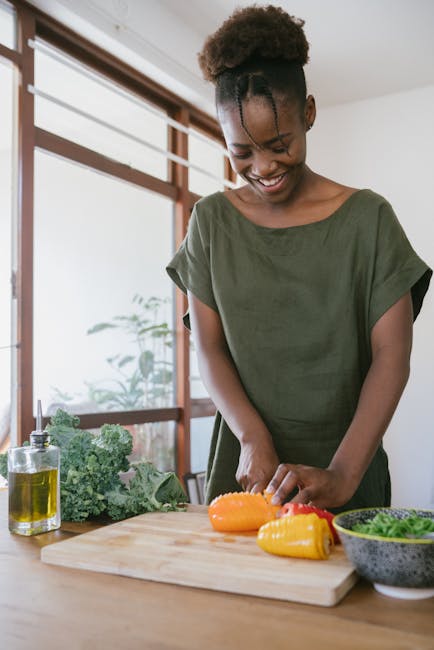
So this is it right here man. I know this is like a bunch of different stuff, right? But what I have right here, trust me. we are about to cook together, alright? So, I got some red cabbage, kale, I got some leftover wild rice right here, that I'm about to reheat on the stove. I've got some purple sea moss, burro bananas. This is on Dr. Sebi's list, but I hate it. We call this bannann, I've got pepper, I've got some old beans right here. And this right here, if you're not Haitian and don't know what this is or if you're not from the islands, this is called epis. So, this is something that we make in Haiti.


Also, a lot of countries in islands, alright, also make this and pretty much what this is is; this is the base of a lot of my meals and so I have cilantro here, parsley, garlic, olive oil, a bunch of different herbs and seasonings. If you guys want to see me make a video on this, then let me know and I might make it for you, okay? So, this is what it is right here, man, come cook with me and watch how we take these leftovers and make it into something better. So the first thing you got to do, of course, is to cut up the kale and the red cabbage.


Now, I'm not sure what I call this meal right here, but I just like to throw a bunch of different stuff together and then you know, it always turns out good... For the most part I'm about to actually get started on the rice. So, I'm going to add some alkaline spring water. Boom! Get the old rice right here. Pour it in there, you know what I'm saying? Boom! So I'm gonna turn that on. I hate gas guys, Alright, so while that's cooking, about Assad status. So the first thing I'm gonna do is spray some avocado oil on here as the base and the reason why I like avocado oil is because it has a high p threshold.


I'm going to turn on the fire with the avocado oil. Boom! So, the first thing I'm gonna do is I'm going to add probably two tablespoons of my Haitian epis. Oh! What am I doing man? This is a fork! Hold up! Let me get a spoon. Hold on let me get a spoon. Alright, boom! Alright! So, we've got that cooking while we get two tablespoons of epis. Drop it on the as the base and, I'm not lying, if you're Haitian and you grew up with epis you can comment down below and tell them just how good the house will be smelling when you put that fresh epis on the oil. It will smell amazing. So, it's sizzling right now. So that's sizzling. Alright, so a lot has been made. I'm going to cut the bannann or as we call it in Haiti, the plantain. So what you're going to notice is that a lot of times, I like to switch from Kreyol to English.


pexels-photo-958545.jpeg?auto=compress&cs=tinysrgb&h=650&w=940

I'm not apologising Dutch Dashis not here Alright. So, I'm about to drop the veggies in there. It smells so good. Boom! Alright, so I'm gonna let that cook down for a little bit. And I'm gonna add the lid so it steams ight now. I got the fire on about a medium heat and am checking on the rice a That rice is smeling good too.


Okay, so the veggies have been cooking for a while, so I added my sea moss on to, with a bunch of spices. So I'm just gonna mix this up with the epis at the bottom. It's smells so good. So, in addition to the epis, I also added more garlic. And I also added some of this seasoning right here; Jollof Rice Seasoning. Shout out to all my Africans, shout out to all my Nigerians; Ndewo Alright. So, it's time to cut the bannann. This is one of my favourite foods right here. This is why I can't live in a place that's cold because I have to have my fresh fruits, tropical fruits and vegetables.


I can't do it, man. I can't go back to New York. I can't! I have to live somewhere where it's hot. Alright. So, pay very close attention to how I cut this plantain. So, I don't really like to cut it straight down unless I'm making bannann peze, which is something that we make in Haiti with green plantain where we fry it first and squish it down. This is bannann douce. So, what I'm going to do is: I'm gonna cut it at an angle. Everybody that's from Haiti right now knows exactly ( speaking Kreyol) That's ready. So, now I'm about to add the bannann. Yeah, I gotta be careful when I'm doing this because I might lose a... you know? Yeah, I might lose a hand man, this is gonna be hot, you know what I'm saying? Just add that in there So, boom! So, the plantain is done right now.


So, what I'm going to do is, I'm going to put a paper towel on just take off some of the excess oil. So, I would put some paper on it real quick and then I'm gonna press it over the top, just to get off some of the extra oil because I don't want too much oil on. Well going; it's almost done really. Alright! So, now I'm gonna add some pink Himalayan sea salt. For Haitians, we don't really measure things out. So, I don't know how much salt I'm putting. I just go by the spirit. I've got my spirit telling how much salt to put, how much oil, how much pepper.


Haitians don't really measure anything. So, boom! That's the bannann. So, now let me show you how this meal is about to Boom, guys! So, this is the final result. So, I have wild rice with some sweet peppers and peas, I have a vegetable Medley that are sauteed in my Haitian epis. And I have my bannann peze as we call it in Haiti, or sweet plantain. The only thing that this meal is missing is avocado. But, (Speaking Kreyol), this meal is gonna be amazing. This is my first whole meal after 42 hours of fasting. look... Alright, boom! So, this is the first meal. Gotta set my intentions straight. I'm going straight for that plantain. This is how your plate should be looking. There should be a bunch of different colours in your plate for different health benefits. Each herb has a certain organ affinity that helps different organs. This is the way that I love to eat. I love to eat like my ancestors.


You see, to me this is actual soulfood; food that makes the soul feel good. Ridiculous. That epis just adds such a great flavour with the sea moss because the sea moss is naturally salty. So, that's a really good mix. But anyway family, I'm about to get to work. If you've enjoyed this little video, make sure to like, comment and subscribe. Do everything that the YouTube is asking you guys to do. I'll see you guys in the next one,(speaking Kreyol). And, as always, stay blessed! Wait, you're still here? If you don't mind, go hit that notification bell, so you get notified every time I upload. If you hit that bell, I'll give you some bannann.


You know you want some. You smell it? Alright, man. Yeah, I gotta go now..

african instruments

https://howtoplaythedjembedrums.com/breaking-my-42-hour-fast-with-vegan-african-food-come-cook-with-me/

How H&M’s Recycling Machines Make New Clothes From Used Apparel | World Wide Waste

https://www.youtube.com/embed/obO1PKfXGpQ


these fibers are made from old clothes it's part of a process that can turn nearly any used fabric into something brand new and fashion retailer h m bets this solution could eventually recycle some of the billions of tons of textile waste produced every year but can a fast fashion company solve the problem it helped create we went to hong kong and sweden to find out most recycled textiles are turned into mattress stuffing or insulation and the original materials are scraps from the factory floor not used clothing but this facility inside a hong kong shopping mall is the first in the world to turn used clothes into new clothes all in one place first a technician like emily shao examines the garment so today we will recycle all garments this ozone chamber sanitizes the fabric in about an hour then emily removes the buttons labels and zippers and cuts the garment so the fabric is easy to work with the shredder strips the bits of cloth down further and then i will take off the open fabrics but this part of the process does require some new materials so we will add some virgin fibers into the yarns to make it stronger another machine mixes that cotton with the recycled skirt emily then rolls the mixed fibers into clumps and feeds them into a machine that turns them into what's called a fiber web but what happens next makes the assembly line in hong kong the first of its kind the fiber web gets bundled into these snake-like slivers the slivers are then spun into ply yarn the building blocks of a new garment finally a machine knits a new sweater based on a computer design shoppers pay about sixty five dollars to recycle clothing here how do we help consumers think about their clothes differently well that's one of the reasons why we have a glass box doing research in a shopping mall the h m foundation partnered with the hong kong research institute of textiles and apparel that investment allowed the company to license and install the technology at one of their stores in stockholm where the company's headquartered h m calls it the loop here shoppers pay only 18 dollars to see the recycling process in action that's about the price of a new pair of the brand's sweatpants how it comes out and then this is the only part that has to be removed virginia the technician trims the extra yarn and the garment is ready to go it takes three days to recycle one garment that seems like a lot of time and effort to turn a sweater into a new sweater that's because a factory like this that can recycle thousands of tons of clothes a day doesn't exist yet but h m says that eventually this kind of technology could be a global solution for textile waste the holy grail is a government to government recycling and that's for me where today most our investment going to but the fashion retailer continues to grow by selling cheap clothes to more and more people how often do you go and buy you maybe one time a week how big is your wardrobe it's like maybe half of my apartment well retail kings and queens she needs a walk-in closet yes but swedes aren't the biggest contributors to textile waste the average american spends over 1800 a year on new clothes and throws away 200 t-shirts worth of textiles every year people didn't always treat clothing as disposable fast fashion really took off in the 1990s thanks to polyester the synthetic fiber made from petroleum costs half as much as cotton i think very few people realize that most of the time today they're wearing plastic by the year 2000 polyester overtook cotton as the most popular fiber in the world that's the same year h m opened its first u.s store in new york city since then global clothing production has doubled and if nothing changes it will nearly double again by 2030 all that used apparel can end up in places like accra ghana which has one of the world's largest second-hand clothing markets every week 15 million garments pass through the contamanto market and nearly half of that goes to landfill is burned or gets swept into waterways we've completely devalued what clothing is clothing is now disposable and i don't know how we come back from treating it like a plastic bag or like a plastic bottle liz ricketts has spent over a decade documenting how used clothes from wealthy countries are exported around the world the clothing that's going to landfill a lot of it is wearable and a lot of the waste comes from familiar brands it's definitely the top 10 which are what you would expect i mean it's h m and zara m s adidas nike gap it would take the loop recycling machine almost 50 000 years to deal with just one week's worth of waste from the market you can't really convince yourself that creating clothing but doing it better is somehow going to solve this issue that there's simply too much clothing still h m executives say they're serious about scaling up recycling the company has set a goal of using only recycled polyester by the end of the decade we have developed together with one congreta a machine called the green machine the h m foundation invested 12 million dollars into technologies like this machine that recycles polyester and plans to build a larger factory that can recycle over three thousand pounds of clothes per day but hk rita ceo admits that recycling has a long way to go before it can make a dent in the industry's growing waste output the commercial scale useful recycling systems have to be in the order of magnitude of at least thousands of tons a day today less than one percent of used clothing is recycled into new garments it is clear to us that we don't have a lot of time we have this danger of doing too little too late experts say that recycling can never solve the problem of textile waste brands have basically convinced citizens that we have a waste problem because we don't have recycling technology that is not that is not why we have a waste problem it's only going to be solvable if we confront growth and if companies stop over producing h m has no plans to reduce production of new clothing we are a gross company our ambition is how do we make that growth being meaningful and consumers can do their part by buying less and holding on to their current wardrobe longer we always recommend that people take a year off of buying anything new even hk rita's ceo recognizes recycling alone can't solve the problem the companies that manufacture clothes will need to change the way they do business and that is what keeps him up at night my nightmare my nightmare scenario in the industry is that we are satisfied we're happy with very modest goals but that doesn't really do anything for anybody and then we'll be accused of greenwashing and by and large it'll be true you


pexels-photo-10319780.jpeg?auto=compress&cs=tinysrgb&h=650&w=940

african instruments

https://howtoplaythedjembedrums.com/how-hms-recycling-machines-make-new-clothes-from-used-apparel-world-wide-waste-2/

They took me to African Night Beach Party in Sierra Leone 🇸🇱😍🔥

https://www.youtube.com/embed/HBvsegt_upU


Now look at this.. It is already night, and there is no electricity. Everything is being cooked in this Barbecue, even dal. It is already 12 in the Midnight. Hey guys very good evening, and welcome back to a new vlog. My name is Tourvashu. I am currently in Freetown which is the capital of Sierra Leone, a West African country. There is an Indian living here, I have come to his house. He has given me this room, this room looks good. It's currently 4:00 in the evening and we are going out.


It was raining from morning till 2 pm. Now its 4 o'clock in the evening and the rain has stopped. I am currently in the balcony, view is so beautiful from here. The view from the balcony is very beautiful, I don't have words to explain! This is the view from the balcony. Freetown is located on the hill station. The big white building which you are seeing is the US Embassy. In all the cities which I have visited in West Africa till now, I feel Freetown is the best city in West Africa. It is a very beautiful city covered with greenery. You can have a lunch, dinner and breakfast in this balcony with the amazing view. It will be more beautiful when it will be raining. We are taking these items. We are taking this items for one or two days. We are three , and they are three. So total 6 members. Is this an ambulance? It is not ambulance for patients, it is just for medical purpose. We are going out of Freetown, but I don't know where we are going. It is a bit far from this place. It was raining in the morning and now it is sunny.


He is Rameth, from Kerala. Where are you from Kerala? I am from Kannur, which is in the north part of Kerala. How long have you been in this Freetown? I am here from 2017. It has been more than 5 years. After India, you has come to here and you have not gone out of here? Yes, I am here in Sierra Leone from 5 years. You have not visited any neighboring countries? No, I have not visited any neighboring countries. The city is very beautiful. The city is good, as well as the people are very good. They are very friendly. Same as India, there are both good and bad people. You should be more careful. So where are we going now? We are going to a beach, its a bit far. There is a beach here. Tokeh beach. My friend has a private house, we are going there. We will stay there and come back tomorrow morning. I also don't know where the location is. What do you do for a living? What work do you do here? I am an Accountant.


In which company? I have a private Lebanese company here, I am an Accountant in that. There are a lot of Lebanese community as well. There are Lebanese and Indians. In foreign community, more people are from Lebanon and India. Indians and Lebanese are more in this place. And also they do more business which are running here. I guess more Indians are doing business here. There is a Indian hospital and super market. There is a Indian hospital and super market. The vehicle is full. 2 more people are coming. Shall I open this window? Yes, open that. We are going for a one day trip, there are many luggage's. There are more items. President is going here. President of Sierra Leone is going.


pexels-photo-3622643.jpeg?auto=compress&cs=tinysrgb&h=650&w=940

I can't see him, Where is he? He is coming from the opposite side. He is Sierra Leone President, who is going on the road. He is going on the road. What is the name of the President? Julius Maada Bio. The boat which are seeing, that goes to airport. This boat goes to airport. We have to take a boat from here to go to the airport. Ferry goes from here to Freetown Airport. Freetown, Lungi airport. It goes to the Freetown airport, the charge is $40 The International Airport which is here is called Lungi airport. Lungi International Airport. The condition of the road is very bad. Now look at this... We have reached to our destination, many people have come. This is the location. We can see the Beach from here. This place is around 80 km from Freetown, halfway was good other Halfway was very bad. This is a beach which is located on the Atlantic Ocean. This is a very beautiful location, I still don't know the name, I have to ask. It is a very scenic view, it is a white Sand Beach. There is forest on the other side. I will introduce you, everyone now.


Everybody is taking photographs, in this beautiful location. People are taking photographs, from very long time. There is a narrow strip of land in the beach. It is already 6:45 and sun will set in another 15 mins. It won't get spoilt right? Nothing like that. It is night and there is no electricity, we are cooking by turning on the torch in our phones. We are cooking here, they are making Sabzi and other dishes.


This is the and there are many items. Masala and all the vegetables are mixed in this dal. Which masala is this? This is Garam Masala. Egg Scramble is being cooked. Brinjal is being cut. Will you fry this? They don't like spicy item, so we are not adding any spices. Everything is being cooked in this barbeque. This is barbeque.


This is rice. I guess she is going to make French fries. It is frozen French fries, she is going to cook that. She is making French fries. You can hear the sound of the oil. French fries has been cooked and is ready to eat. This is meat and this is going to be cooked on the barbeque. Dal is being cooked. There is vegetables in this Dal, everything is being cooked on this barbeque. Come this side. Shall I leave my slippers, or come with slippers? Leave it in the boat. If the water comes, it will take your slippers. They are doing fishing in the midnight. It is already 12 in the midnight. They doing fishing in the midnight..

african instruments

https://howtoplaythedjembedrums.com/they-took-me-to-african-night-beach-party-in-sierra-leone-%f0%9f%87%b8%f0%9f%87%b1%f0%9f%98%8d%f0%9f%94%a5/