Thursday, 2 March 2023

Djembe Drum Carving in Accra Cultural Market

https://www.youtube.com/embed/itQIX_hOnHw


Everyone concentrates on their own aspect You da guy You recognize what I do? I deal with the skin Wow Yea What'' s on the skin? Is that Goat? Yea, fully grown goat skin We have goat as well as cow The goat is for newbies and the cow is for masters The cow is a lot more expensive than the goat Oh That is real great there This is genuine handwork No Chinese stuff you understand That'' s why I claim you reached have a look at K E-R Booker Booker Booker T E R It looks great Obtained me up in right here, hit me up made me spend more money than I wished to spend Yea, we obtained great things You got a mask, you obtained a drum That'' s the ideal point you can see in the market Every little thing is ... yea ... Chinese You said it'' s Chinese? Yea, this is handmade He claimed everything else is Chinese man If you don'' t come here then you put on'' t get to see the genuine things That'' s what it is Why y ' all out below It is what it is. Is that Goat? Yea, mature goat skin We have goat as well as cow The goat is for newbies and also the cow is for masters The cow is more costly than the goat Oh Why y ' all out below It is what it is.


pexels-photo-6193717.jpeg?auto=compress&cs=tinysrgb&h=650&w=940

learn djembe here - click

https://howtoplaythedjembedrums.com/djembe-drum-carving-in-accra-cultural-market-2/

Darbuka Lesson 1 - position & strokes [B]

https://www.youtube.com/embed/eLpablRicOc


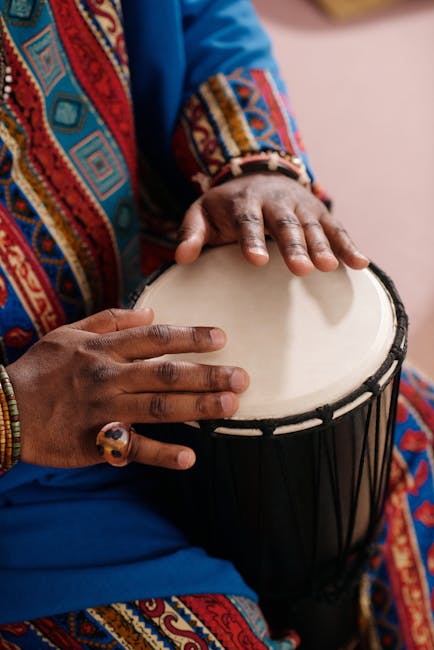
Hi, welcome to my darbuka tutorial as well as ... ... here is a photo of a blackboard we discovered on the net. So, first the playing placement. The darbuka is a goblet drum. If you are right-handed, area it on your left lap. As near to your hip as feasible. Look for balance, and also finally turn it inwards, to ensure that it falls ... ... yet, avoid it from dropping with your right lap. In this setting, the darbuka needs to be safe and secure. Check it, and also if it is, put your left hand on top of it ... ... with the suggestions of your fingers touching the membrane layer, and also the wrist on the covering here, as well as the arm joint on the back of the shell.And stay clear of chairs that are too expensive. If they are the darbuka may roll down from your legs. And also currently for fundamental audios, of which there are 3: the base Dum, the right-hand man Tak, and also the left hand Ka. The first audio is the Dum. It'' s a bass noise. You struck it with your fingertips: 4 or 3 of them, in the middle of the membrane layer ... ... and you launch the membrane right away to allow it vibrate. Like this. The only problem is that your fingers need assistance. So what you really do is you make an arch with your hand ... And also you struck concurrently with your fingertips in the center, and with your wrist on the edge. Like this. Locate the best angle, because if you struck too strongly with your fingers or too highly with your wrist, the sound won'' t come. Find the angle ... and also play. Back to chalkboard. The following 2 sounds are the right-hand man Tak and the left hand Ka. Now, they are practically similar, but bear in mind the darbuka is not a symetrical tool like the African djembe, as well as it has different strokes for both hands.So, what you do


pexels-photo-9630174.jpeg?auto=compress&cs=tinysrgb&h=650&w=940

, you utilize your ring- or your ring- and middle-finger and also you try to strike with your last joint precisely the side of the membrane. Such as this. And attempt to utilize your wrist. Not your arm, but your wrist. The Ka is practically the very same. You also struck it with this one or these 2 fingers: last joint right here. So ... Wow! did you see that!? That'' s incredible! Certainly, I can'' t actually see it. I have a paper right here. That'' s it! Many thanks for watching!. Examine it, and also if it is, place your left hand on top of it ... ... with the pointers of your fingers touching the membrane layer, and also the wrist on the covering right here, and also the elbow joint on the back of the shell.And stay clear of chairs that are as well high. As well as now for standard sounds, of which there are 3: the base Dum, the best hand Tak, and also the left hand Ka. What you in fact do is you make an arch with your hand ... As well as you hit all at once with your fingertips in the facility, and also with your wrist on the edge. The next two sounds are the ideal hand Tak as well as the left hand Ka. You additionally struck it with this one or these two fingers: last joint right below.

learn djembe here - click

https://howtoplaythedjembedrums.com/darbuka-lesson-1-position-strokes-b-2/

Gyakie & Omah Lay - Forever (Remix) (Official Music Video)

https://www.youtube.com/embed/q5URc13jOv0


FALSE:: ERROR: UNSUPPORTED ENCODING


null

learn djembe here - click

https://howtoplaythedjembedrums.com/gyakie-omah-lay-forever-remix-official-music-video/

Ruger - Bounce (Official Video)

https://www.youtube.com/embed/I9tqmugh2X8


FALSE:: MISTAKE: UNSUPPORTED ENCODING


null

learn djembe here - click

https://howtoplaythedjembedrums.com/ruger-bounce-official-video/

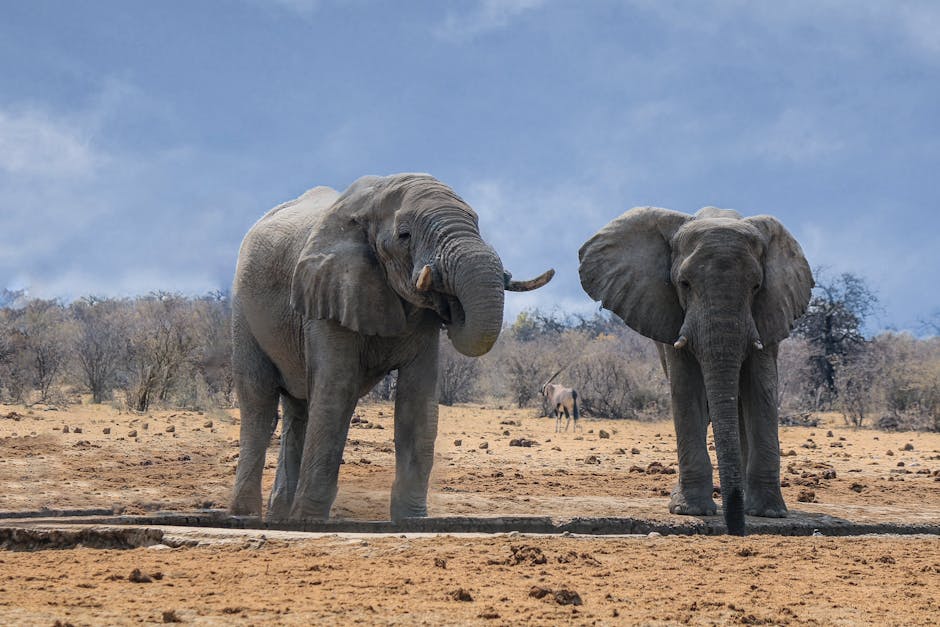
Why so many African Elephants Don't Survive their First Year

Across Africa, from Namibia to Uganda, elephant babies are trying to keep their heads above water, trying to suckle, to keep up with the herd, to make it to adulthood. But one third of baby elephants will die in this first year of life. And sometimes the threat to a baby's survival comes from within the herd. It's been a good year. The elephant herds of Uganda are increasing. In the 1980s, they were poached to the brink of extinction in the country.


Now there are more than 5000 individuals. The land is green. There's plenty to eat. Newborns are almost lost in the grass. It takes a whole herd to raise a baby elephant. Female elephants help look after each other's calves. It's called alloparenting. In the process, young females learn how to care for their siblings and calves are given a better chance of survival. The babies are born after almost two years of gestation. This long development time gives them another survival advantage. They can stand and walk immediately after birth so they can reach their mother's milk. They will rely on it for the first year. Each day, the baby elephant gains almost 1kg, or two pounds of body weight. Scientists have discovered that the composition of elephant milk differs from that of all other mammals, as well as being different for Asian and African elephants. It actually changes as the baby grows.


The protein, mineral and fat content increases during lactation, providing more energy as the baby develops. But despite the best care a herd can offer, about one third of baby elephants will die in this first year of life. They will never reach adulthood. There are many threats. Water, the thing elephants need the most can also kill them. Adults need to drink up to 189 liters, or 50 gallons a day. Despite the raging torrent, the family has to cross, but babies can't swim until they're several months old. Adults have evolved ways to push their young along. They used their trunks like arms to usher them to safety. In Namibia, water isn't always plentiful, but elephants can smell it from up to around 19 kilometers or 12 miles away.


This herd is making a beeline for a man-made watering spot in Etosha National Park. A new study has found that in warm weather, elephants can lose up to 10% of all the water in their bodies. That equates to about two full bathtubs a day, the highest level of daily water loss ever recorded in a land mammal. It's a relief to drink, but still, the herd must stay alert. Baby elephants are intelligent little beings, but they aren't born with the instinct to use their most important appendage - their trunk. They can't use it to grasp food or to suck up water. This can make drinking awkward and precarious. A youngster falls into the trough. He calls to alert the adults. The herd reacts in unison. The water isn't deep, but the panicked baby could easily drown. The trough is narrow and hard to access.

pexels-photo-3739327.jpeg?auto=compress&cs=tinysrgb&h=650&w=940

The females can only watch on while the youngster remains stuck. Many trunks, but no rescue, until a mature female finally lifts him to safety. Even at natural waterholes, like this one in Namibia, where there's plenty of room to move, female elephants must stay calm when dealing with emergencies so as not to panic others in the herd, especially their calves. Mud baths should be enjoyable, not traumatic. This matriarch gives a youngster a helping trunk, a lesson for baby and another young member of the herd. But Elephant Society isn't always so cooperative. Researchers at Mushara Waterhole in Namibia have witnessed a darker side of the elephants' nature where danger doesn't lie outside the herd, but within it. This baby and his mother are chased away from the water by the matriarch. The calf just wants some fun, but he sent back to his mother by the other females. Despite living with the herd for the last 5 years, the mother is left to care for her baby alone.


Most of the herd begins to move on, turning their backs on the mother and her calf. Two females even throw irritating dust at the parent. The baby has become weak. The stress of rejection may have left the mother unable to produce enough milk. The calf needs to drink around 2 litres of milk every 2 hours. He's getting weaker by the second and is now unable to stand up to feed. If he doesn't drink soon, he will die of dehydration.


Why is this baby destined to die while others are saved? Researchers think this cruel behavior is evidence of a pecking order within the herd. Each elephant has their place in the hierarchy and that status is passed down through generations. This isn't in keeping with our perception of elephant behavior, Herds can break up in places where poaching occurs, but not usually in places like this, where the herd is protected and there's enough food and water. Here in the Namibian desert, resources are scarce. No baby gets left behind. Each one of them is precious. Elephant herds are complex societies. We can only observe and try to understand the dynamics at work within them. In understanding their behaviour at much deeper levels, we may also be able to help them survive.


Thanks for watching. We have more interesting videos about elephants, so check out our playlist and please consider subscribing. We have a new upload every Friday..

African instruments here

https://howtoplaythedjembedrums.com/why-so-many-african-elephants-dont-survive-their-first-year-2/

What a Wonderful World (Louis Armstrong) | Playing For Change | Song Around The World

I see trees of green, red roses too. I see them bloom, for me and you. And I think to myself, what a wonderful world. I see skies of blue, And clouds of white. The bright blessed day, The dark sacred night. And I think to myself, What a wonderful world. The colors of the rainbow, So pretty in the sky. Are also on the faces, Of people going by, I see friends shaking hands.


pexels-photo-3746156.jpeg?auto=compress&cs=tinysrgb&h=650&w=940

Saying, "How do you do?" They're really saying, "I love you". I hear babies cry, I watch them grow, They'll learn much more, Than I'll ever know. And I think to myself, What a wonderful world. The colors of the rainbow, So pretty in the sky Are also on the faces of people going by I see friends shaking hands, saying how do you do? They're really saying, I love you I hear babies cry, I watch them grow They'll learn much more than I'll ever know and I think to myself, What a wonderful world. Oh yes I think to myself, What a wonderful world! OH yes!.

African instruments here

https://howtoplaythedjembedrums.com/what-a-wonderful-world-louis-armstrong-playing-for-change-song-around-the-world/

Short Elephant Story: Exposition on the Elephant 大象小說明 (中文字幕)

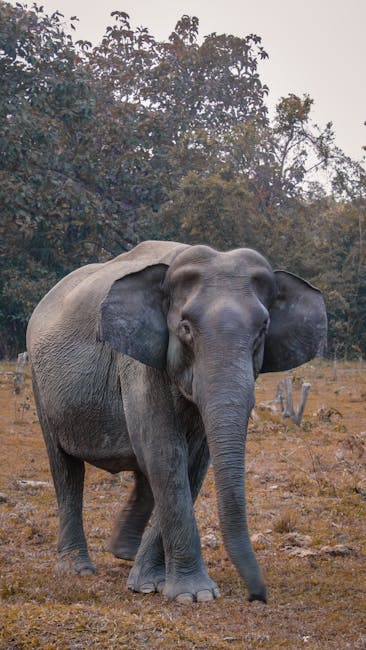
Elephants have been a part of my life since I can remember My first toy was a light blue squishy baby elephant with pink ears and toes There are also many elephant songs in the nursery rhymes of the "world" music when I was young. I often stick to the TV and sing elephant songs along with the TV. Elephants have a special appearance and are very different from other popular animals. The most typical "blind man touches the elephant" story is exactly the emphasis Various first impressions of an elephant The tail is like a rope, the tusks are like spears, the thighs are like pillars, the ears are like fans and the long nose is like a snake When I look at an elephant, the first thing I see is its long nose Its trunk is actually the upper lip and trunk.


The elephant's long trunk can do many things. It can pick up small coins, or small weeds, and it can also lift large logs. Another thing that attracts me about the elephant is its size. The body of the elephant is the largest and heaviest animal on land. It can grow to over ten feet tall, higher than the average ceiling. There is a saying "the elephant in the room", used as a metaphor for things that cannot be ignored The body and intelligence are also very high. Elephants are animals with high IQ. They are juxtaposed with humans, dolphins and apes. They can look in the mirror, learn to use tools, communicate in various ways, and have a long memory. Elephants have a complex social structure and are matrilineal societies.


. The older female elephants lead the herd and pass on wisdom and experience. Elephants are a key species and play a very important role in the environment and ecosystem. Elephants tore down many trees, eat a lot to drink water, and dig many water holes with their ivory. Other animals can eat food while spreading seeds Where is the elephant in the tree of life? Elephants are proboscises, animals with long noses. Their closest relatives are hyraxes and manatees. Manatees are similar to elephants in that they have flat nails and upper lips that can grasp things. Manatees are aquatic animals, while giants The ancestors of elephants were semi-aquatic. Even today, elephants are good swimmers.


pexels-photo-3684839.jpeg?auto=compress&cs=tinysrgb&h=650&w=940


There are three main species of elephants: African savannah elephant, African forest elephant, and Asian elephant. African and Asian elephants can be distinguished by the shape and size of their ears. Other differences include large Elephant trunk The African elephant has two "fingers" on its trunk, while the Asian elephant has only one "finger" All elephant species are endangered To poaching their current habitat, fragmented in Africa and Asia because elephants need a lot of space Fragmented habitats cause elephants to invade human settlements Because of this, elephants destroy homes and eat crops so humans have to find ways to defend In their homeland, one way to prevent elephants from conflicting with humans is to use bees.


Although bees are much smaller than elephants, elephants are very afraid of bees because bees will attack in groups and sting the most sensitive parts of elephants. Therefore, farmers use honeycombs and Bees record to prevent elephant intrusion Elephants have many important roles, they are the key species in the ecosystem and the leaders of their family elephants They have a history of millions of years of evolution In nature, elephants represent wisdom, unique I really hope they can last forever.

African instruments here

https://howtoplaythedjembedrums.com/short-elephant-story-exposition-on-the-elephant-%e5%a4%a7%e8%b1%a1%e5%b0%8f%e8%aa%aa%e6%98%8e-%ef%bc%88%e4%b8%ad%e6%96%87%e5%ad%97%e5%b9%95%ef%bc%89/